If your meeting room echoes, your presenter’s voice drops out at the back of the room, or remote participants keep asking people to repeat themselves, the problem usually isn’t the volume. It’s the way sound behaves in the space and how the audio system was designed for it. Good sound is rarely an accident, and bad sound is almost always fixable.
At Backman Vidcom, we design and install AudioVisual systems across Atlantic Canada, and audio is the part clients most often underestimate. Here is why AudioVisual systems sound bad, and what actually fixes each cause.
Summary
Bad AV sound usually comes from one of a few causes: a room with too many hard reflective surfaces, no acoustic treatment, speakers or microphones in the wrong positions, or an audio system that was never matched to the space or its purpose. Turning up the volume makes most of these worse, not better. The fix depends on the cause: acoustic treatment to absorb reflections, correct speaker and microphone placement, and a system designed around what you actually need to hear, whether that’s a presenter’s voice, a teleconference, or background music. An experienced AudioVisual integrator diagnoses the specific cause rather than guessing.
Why Good Sound Gets Overlooked
Sound is invisible, so it tends to get less attention than the screen on the wall. Speakers are often placed wherever is convenient and deemed good enough. But audio carries the actual content of most meetings and presentations, and when it fails, the whole system feels broken, no matter how sharp the picture is. Getting sound right means giving it as much thought as the visuals, starting with a few basic questions about the room and how it will be used.
What Are You Actually Listening To?
The first question is what kind of audio the room needs to deliver. A public address announcement, a two-way teleconference, and a live presenter using voice reinforcement are three very different jobs, and each demands a different approach. A system tuned for clear speech in a boardroom is not the same as one built for music playback or one designed to capture a room for remote participants. Identifying the primary use lets the system be tuned for that task rather than compromised across all of them.
What Kind of System Does the Space Have?
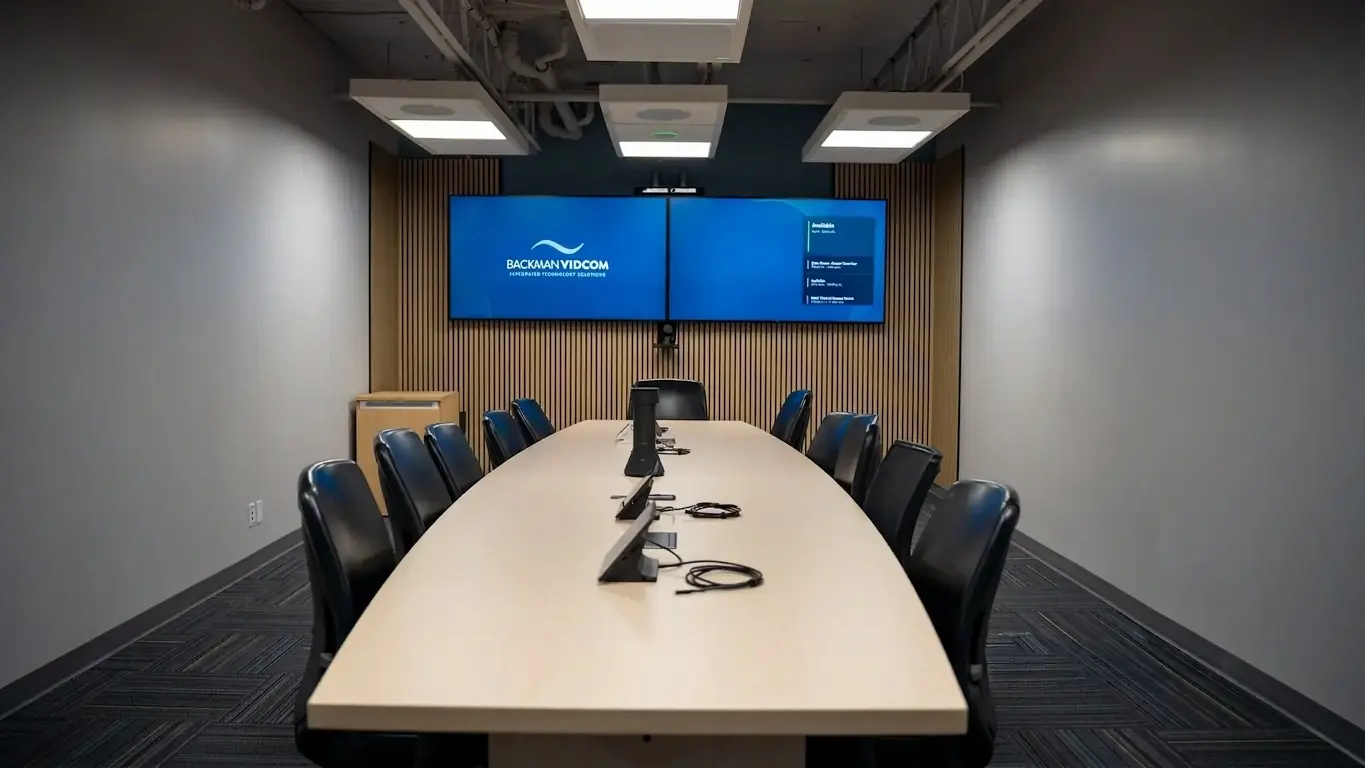
The physical setup matters just as much. Ceiling speakers, wall-mounted speakers, and portable systems all behave differently, and the right choice depends on the room’s size, shape, and ceiling height. A large room with a high ceiling and hard surfaces has very different needs from a small carpeted huddle space. This is closely tied to the room’s acoustics, which is often the real source of poor sound. Our post on how sound masking and acoustic panels improve the workplace covers how surfaces and treatment shape what you hear.
What Are You Listening For?
Different priorities call for different design choices. If the goal is clear spoken word, the system should be optimized for intelligibility in the mid-range, where the human voice lives, with controlled dynamics so nothing is jarring. If the goal is music, the priorities shift toward rich tonality and a wider dynamic range. A teleconference solution prioritizes capturing voices clearly for people who aren’t in the room. Naming what matters most for your space keeps the design focused on the right things instead of trying to do everything at once.
The Most Common Causes of Bad AudioVisual Sound
In practice, poor sound in a commercial space usually traces back to one or more of these:
- Hard, reflective surfaces. Glass, drywall, and hard flooring bounce sound around the room, creating echo and muddiness that make speech hard to follow.
- No acoustic treatment. Without panels, baffles, or soft materials to absorb reflections, sound lingers in the room long after it should have faded.
- Wrong speaker or microphone placement. A speaker aimed at a glass wall or a microphone placed too far from the people talking will undermine even good equipment.
- A system not matched to the room. Equipment chosen without regard to the room’s size, acoustics, or purpose rarely performs well, regardless of how good the individual components are.
How an AudioVisual Integrator Fixes It
An experienced integrator starts by diagnosing the specific cause rather than throwing new equipment at the problem. That usually means assessing the room’s acoustics, identifying which surfaces are causing reflections, and determining whether treatment is needed. From there, speaker and microphone placement is designed around the room and its use, and the system is specified to match. We saw this on an industrial scale at a Dartmouth machine shop, where acoustic panel installation cut reverberation by more than two thirds, turning a space where emergency alerts were hard to hear into one where communication was clear. You can read that industrial acoustics case study for the full story.
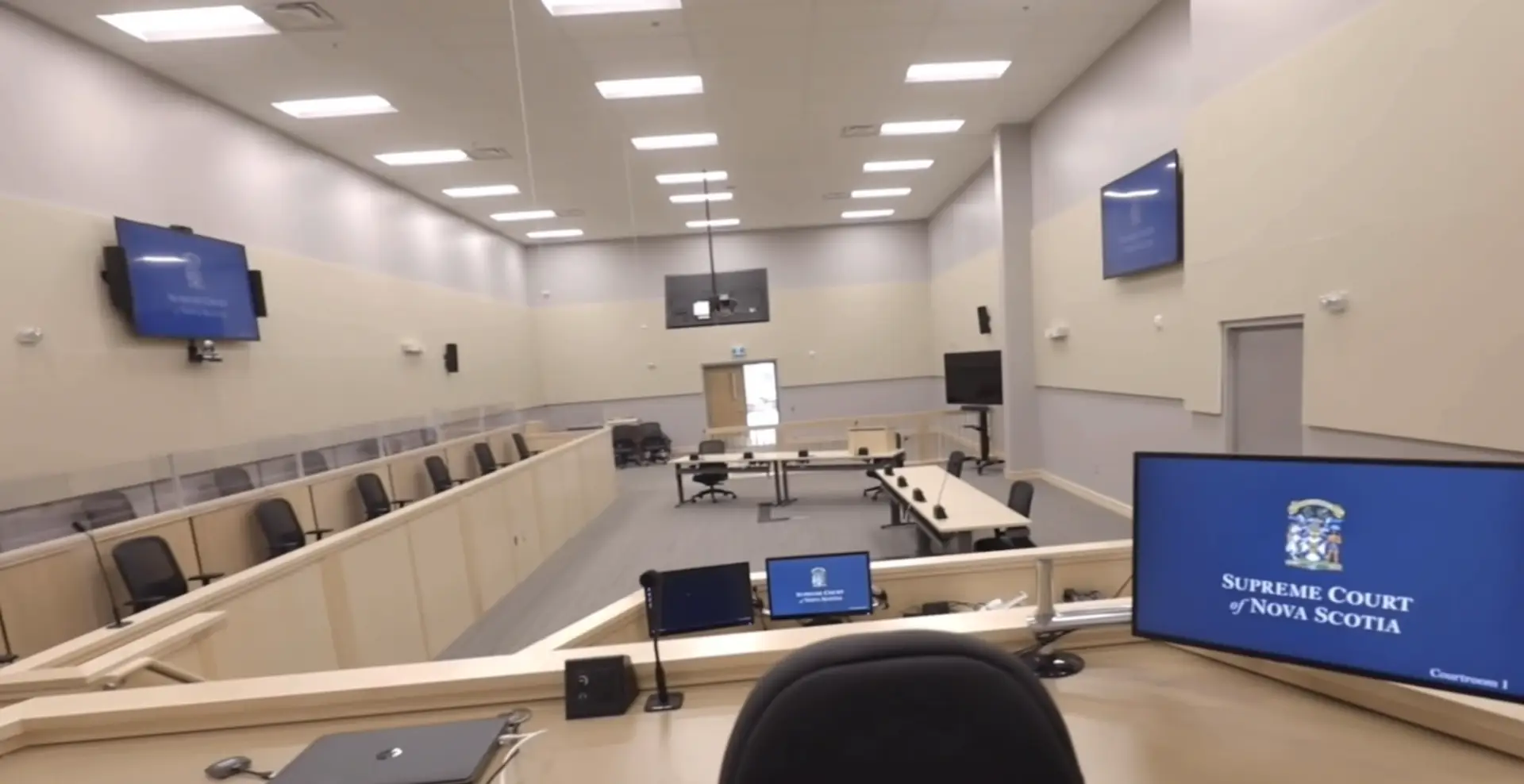
The same principles apply whether the space is a boardroom, a classroom, a legislative chamber, or a hybrid meeting room. If your room needs to serve both in-person and remote participants, our guide on what AudioVisual technology a hybrid meeting room actually needs covers the audio side in more depth.
The same principles apply whether the space is a boardroom, a classroom, a legislative chamber, or a hybrid meeting room. If your room needs to serve both in-person and remote participants, our guide on what AudioVisual technology a hybrid meeting room actually needs covers the audio side in more depth.
Frequently Asked Questions About AV Sound
Why does my meeting room echo so much? Echo is caused by sound reflecting off hard surfaces like glass, drywall, and hard flooring. The fix is acoustic treatment, panels or baffles that absorb those reflections, combined with speaker and microphone placement that works with the room rather than against it.
Will turning up the volume fix bad sound? Usually not. If the underlying problem is echo, reflections, or poor placement, more volume adds more energy to an already problematic room and often makes intelligibility worse. The cause needs to be addressed, not amplified.
Do I need acoustic treatment or a better sound system? It depends on the room. Many spaces with poor sound have adequate equipment but untreated acoustics, so treatment solves the problem. Others need both. An assessment identifies which, so you don’t spend on equipment that won’t fix the real issue.
Can bad AV audio be fixed in an existing room? In most cases, yes. Acoustic treatment can be added, speakers and microphones can be repositioned, and the system can be re-tuned or upgraded to match the space. We assess the room during a site visit to determine the most effective fix.
Stay ahead of the curve. Subscribe to the Backman Vidcom newsletter for practical AV insights built specifically for Atlantic Canada organizations. No fluff, just guidance you can use. Subscribe here.
Backman Vidcom – AudioVisual Integrators in Halifax, NS
Backman Vidcom has been designing and installing professional AudioVisual systems for organizations across Atlantic Canada for more than 50 years. If your meeting room, classroom, or event space isn’t sounding the way it should, contact us to arrange a consultation, or call 902-450-5005.