
Case Study
The Links at Brunello - Events Pavilion Acoustic Treatment
- Client: The Links at Brunello
- Location: Halifax, Nova Scotia
- Event Pavilion
- Architectural Acoustic Treatment
The Challenge
The Events Pavilion at The Links at Brunello was built to be a showpiece: an elegant, adaptable venue capable of hosting weddings, receptions, and corporate gatherings for more than 150 guests. While the architecture was striking, with tall, sloped ceilings and an open layout that invited natural light, it also created a lively acoustic environment.
Brunello’s management quickly recognized that the very features which made the Pavilion visually impressive, the expansive ceilings and open design, were also creating unwanted acoustic reflections during events. Music and conversation tended to carry across the room, making it harder for guests to enjoy the comfortable, welcoming atmosphere the Pavilion was designed to offer. Leadership at Brunello were looking for an acoustic treatment solution that would preserve the Pavilion’s aesthetic while enhancing the acoustic experience for every occasion.
The Solution
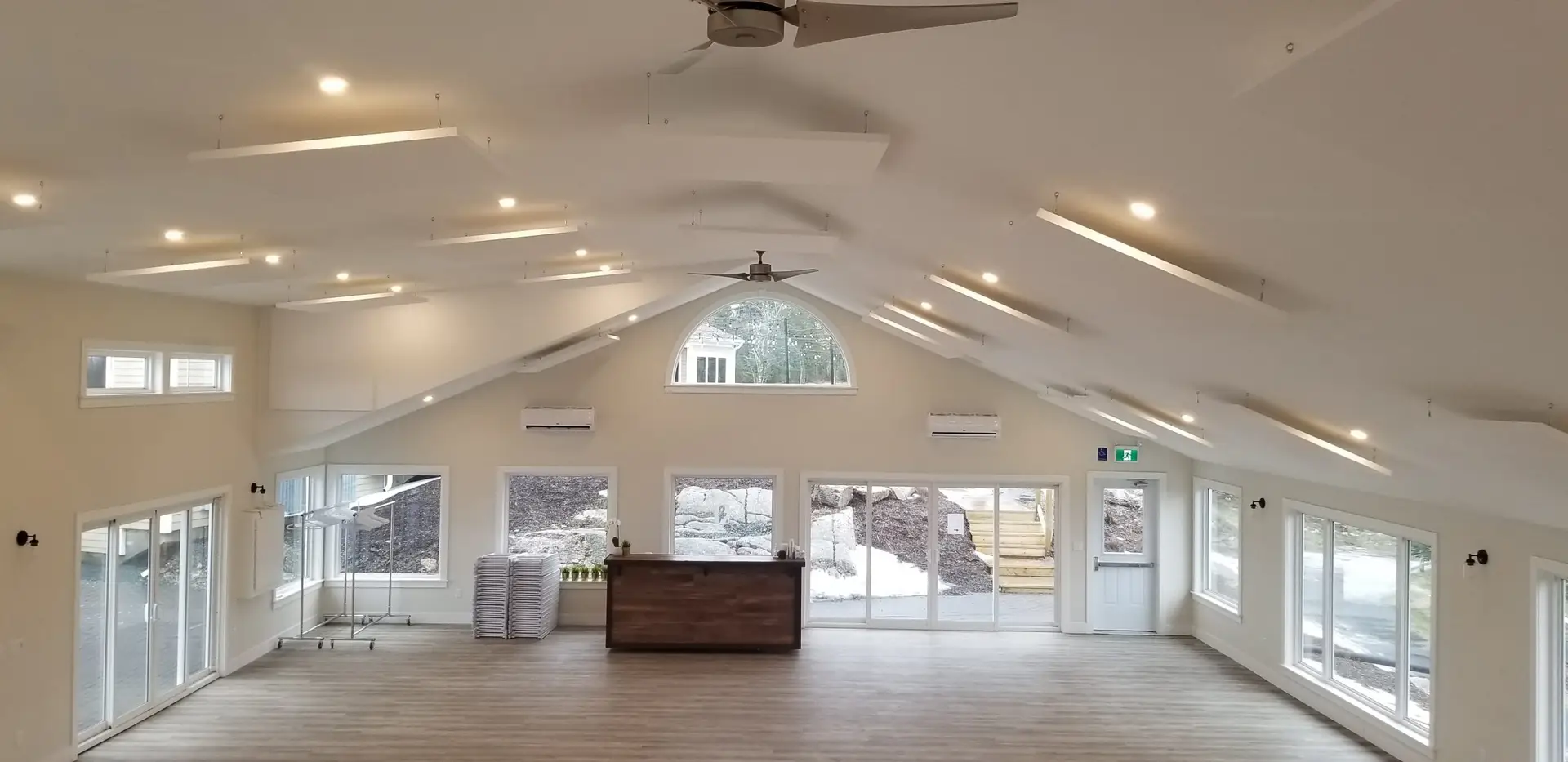
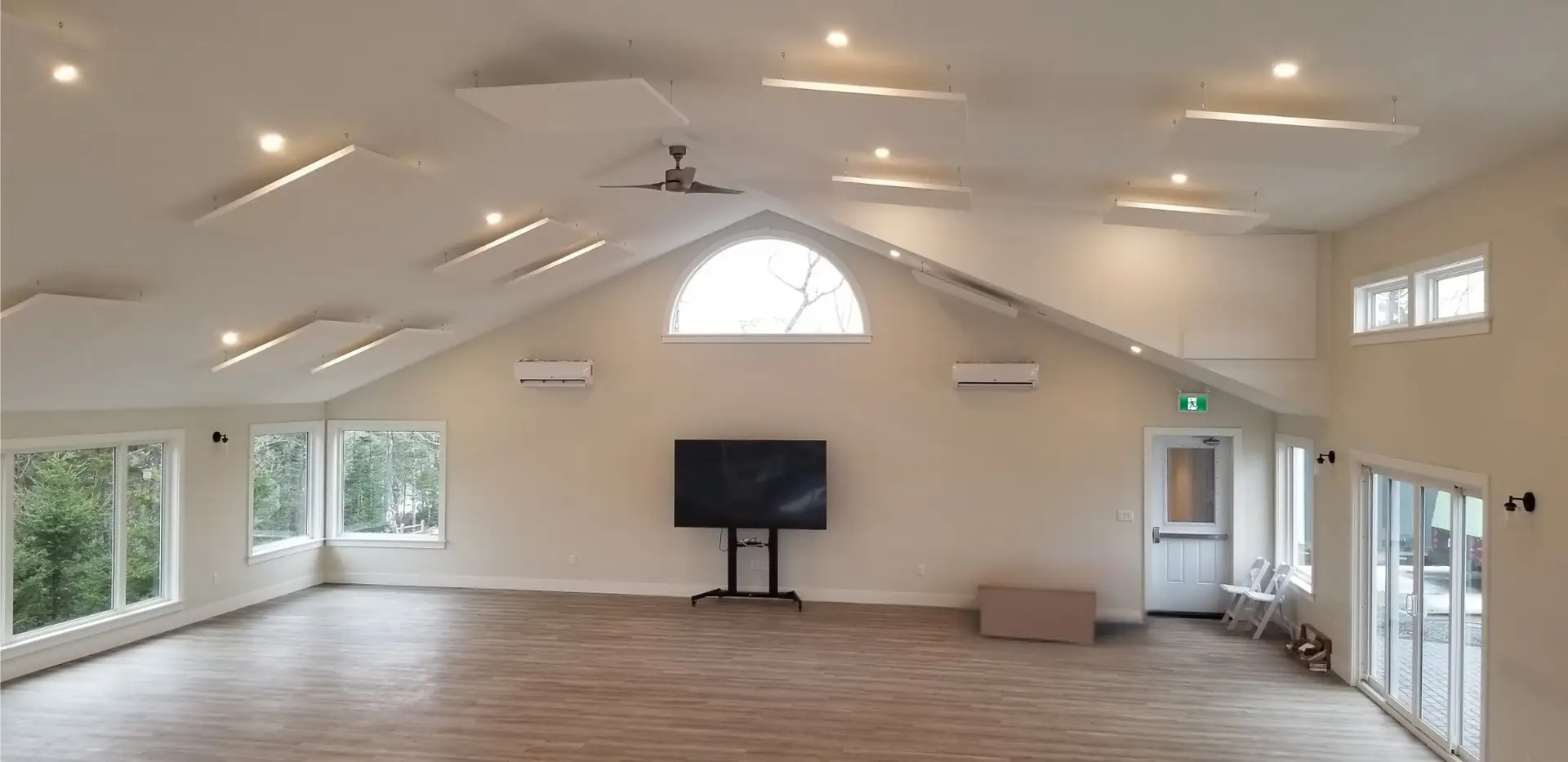
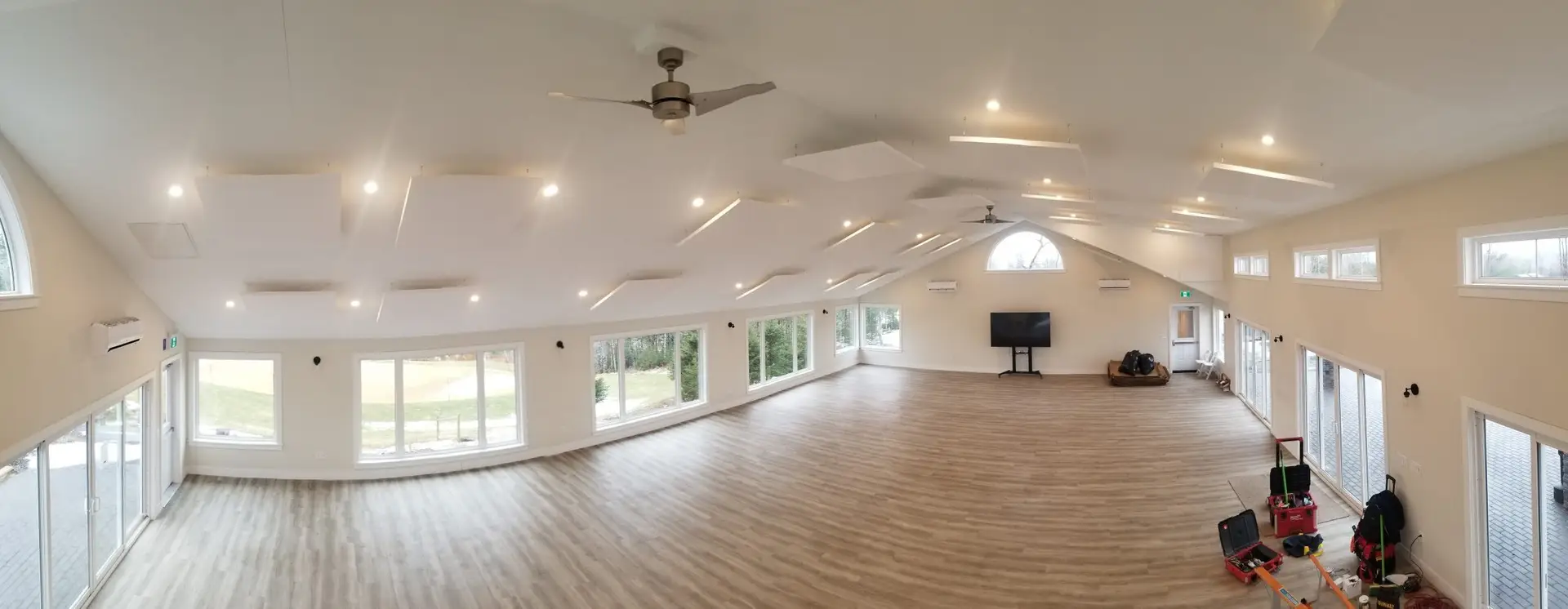
Backman Vidcom developed a tailored acoustic treatment plan that would respect the Pavilion’s architectural features while addressing its reverberation issues. Rather than relying on wall treatments or simple fixes, the team designed and installed a series of suspended acoustic panels. These were carefully positioned to hang six to eight inches below the ceiling, allowing them to capture sound energy from multiple directions and maximize effectiveness. This kind of work sits within our broader AV design and integration solutions for hospitality and event venues.
The complexity of the ceiling design made installation especially demanding. With uneven slopes and dormers, even small misalignments would be noticeable from different viewing angles. To ensure precision, the team laid out guides on the floor, used multiple laser lines across the ceiling, and fabricated custom hanging systems to secure each panel. The panels themselves were color-matched to the existing interior finishes, blending seamlessly with the Pavilion’s decor and maintaining the venue’s polished aesthetic.
The Results
The transformation was both immediate and lasting. Where once the Pavilion’s acoustics were overwhelmed, the space now supports clear, comfortable conversation and balanced sound. Wedding receptions, corporate dinners, and community gatherings alike benefit from an atmosphere that feels warm and inviting rather than harsh and noisy.
Crucially, the solution preserved the Pavilion’s beauty. The suspended panels appear as part of the design, complementing the architecture instead of detracting from it. By enhancing both functionality and experience, the project not only solved the immediate sound issues but also safeguarded the Pavilion’s reputation as one of Halifax’s premier event spaces. Explore more of our event and hospitality venue projects or browse additional case studies.
Whether you’re planning a new build, upgrading a facility, or need ongoing AV support, our Atlantic Canada team is ready. Contact us and we’ll assess your needs and get back to you.


FAQ
How do you improve sound in a venue with high, sloped ceilings?
Backman Vidcom used custom suspended acoustic panels hung six to eight inches below the ceiling, positioned to capture sound energy from multiple directions and reduce reverberation without altering the architecture.
Do acoustic panels have to change how a venue looks?
No. The panels at Brunello were color-matched to the existing interior finishes and integrated into the ceiling design, so they read as part of the aesthetic rather than as added equipment.
What kinds of events does the treated Pavilion support?
The Events Pavilion hosts weddings, receptions, corporate dinners, and community gatherings for more than 150 guests, now with clear, comfortable sound.
Why use suspended panels instead of wall treatments?
In a tall, open room, suspended panels sit closer to the reflective ceiling surfaces and capture sound from multiple directions, making them more effective than wall treatments alone while keeping walls and sightlines clear.